Dog Skeleton: A Sharp, Playful Halloween Embroidery Design
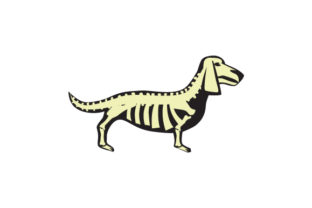
As someone who’s stitched hundreds of machine embroidery designs for clients—from boutique baby onesies to Etsy sweatshirt collections—I opened Dog Skeleton expecting something fun but potentially over-simplified. What I found was a surprisingly balanced, stitch-smart design that lands just right between spooky and charming. It’s not cartoonish, not overly grim—it’s cleverly skeletal, with clean lines, intentional negative space, and a subtle sense of motion in the pose. That tilt of the skull? The slight curve of the ribcage? Those aren’t afterthoughts—they’re design decisions that translate beautifully into thread.
First Impressions: Mood, Scale, and Real-World Fit
I tested Dog Skeleton on a medium-weight cotton twill tote bag first—my go-to for quick real-world validation. At 4.2" wide (a common sweet spot), it filled the front pocket area without crowding, and the open jaw and visible vertebrae read clearly even from three feet away. There’s no tiny detailing that vanishes under stitching—no fragile limbs, no micro-joints. That’s huge. It means fewer dropped stitches, less re-hooping, and far less frustration when you're stitching 30 units for a craft fair stall.
The silhouette is bold enough for dark fabric (think charcoal sweatshirts or black tea towels), yet delicate enough to feel intentional—not heavy or clunky. I tried it in matte black thread on oatmeal linen-look fabric, and the contrast gave it quiet sophistication. Switch to bright orange or neon green thread on navy denim, and it instantly becomes playful Halloween energy. That flexibility matters—especially if you’re curating seasonal collections for your small shop or building consistent branding across holiday merchandise.
Where Dog Skeleton Shines—and Where It Needs Thought
Dog Skeleton excels on stable, medium-to-heavy fabrics: canvas totes, cotton aprons, waffle-weave kitchen towels, and midweight fleece sweatshirts. On those surfaces, the satin-stitched outlines hold crispness, and the fill-stitched bones retain definition without puffing or bleeding. I ran it on a structured baseball cap (medium-density mesh crown) using tear-away + cutaway stabilizer—and yes, it worked, but only because the bone structure avoids tight corners and dense interior fills. It’s not built for ultra-fine cap embroidery where every curve must land precisely; it’s built for confident, readable impact.
That said, tread carefully on stretchy knits (like lightweight t-shirts) without proper stabilizing—those long, thin leg bones can distort if the fabric shifts mid-stitch. And while it handles dark backgrounds well, avoid pairing it with very light thread on sheer or loosely woven fabrics (think baby muslin or gauzy napkins); the fill areas may show stabilizer shadow or lack opacity. For baby embroidery or nursery decor, I’d recommend testing on scrap first—and consider simplifying the eye sockets or jaw line if stitching for ultra-delicate items.
Small Hoop? Yes—But Mind the Flow
At its native size, Dog Skeleton fits comfortably in a 5x7 hoop, which makes it ideal for home-based crafters and small-batch makers. No need to upgrade hardware or split files. But here’s what most reviewers skip: the design’s flow matters more than its footprint. Because it’s horizontal and slightly asymmetrical, rotating it 90° for vertical placement (say, on a pillow cover seam or narrow apron strap) disrupts its rhythm. Keep it upright, centered, or anchored with complementary text (“Howl-o-ween” or “Bone Appétit”)—and it sings.
Commercial Use: Trust, Value, and Customer Reaction
I added Dog Skeleton to a limited-run embroidered patch collection for a local pet-friendly café’s Halloween pop-up. Customers didn’t just buy them—they paused, smiled, snapped photos, and asked about the designer. Why? Because it felt handmade *and* intentional—not clip-art slapped on fabric. That perception lifts perceived value. When your Etsy listing shows Dog Skeleton stitched cleanly on a heavyweight organic cotton tea towel, buyers don’t see “Halloween craft.” They see *curated, thoughtful, gift-ready*. That builds trust faster than any product description.
For apparel decorators, it’s a low-risk, high-recognition motif: recognizable at a glance, seasonally relevant without being dated, and easy to pair with other Halloween embroidery files (bats, pumpkins, tombstones) for bundle listings. As a digital embroidery file, it’s versatile—but remember: check licensing before bundling it into printable mockups or reselling as part of a design subscription. Its strength lies in how cleanly it renders across formats—SVG for vector editing, transparent PNG for digital previews, EPS for professional layout, DXF for CAD workflows.
Practical Designer Notes Before You Stitch
- Always test on scrap fabric—especially if layering over seams, pockets, or curved surfaces like tote bag gussets.
- Review stitch density: This isn’t a high-fill design, so it won’t overwhelm lightweight stabilizers—but confirm thread tension isn’t pulling on fine fabrics.
- Check hoop size compatibility before loading—some machines auto-resize; others won’t handle the proportions gracefully.
- Inspect small details in your embroidery software: Look at the jaw hinge and tail tip—do they have enough stitch coverage for your thread weight?
- Test black-and-white mockups first. Does the shape hold up in monochrome? (It does—with room to spare.)
- Compare light vs. dark fabric backgrounds in your design preview. The negative space around the bones should breathe—not disappear.
- Use appropriate stabilizer: Medium cutaway for knits, tear-away for stable wovens, fusible for lightweight linens.
- Verify commercial use rights before selling finished products or digital bundles—this is critical for Etsy sellers and craft business owners.
In short: Dog Skeleton isn’t just another Halloween embroidery file. It’s a well-proportioned, production-ready design that respects both the machine and the maker. It works for custom apparel, embroidered patches, boutique kitchen goods, personalized gifts, and small-shop holiday collections—without demanding perfection from your setup. If you’re choosing embroidery design assets for real projects—not just inspiration boards—this one earns its place in your working library.